
 Switch
 Homepage
 facebook
 IG
IG
 Other Hospital
 CMUH App

Perineum wash
- Advantage
- Cleanse the perineal area, such as removing secretions, and prevent urinary tract infection.
- Eliminate odor and promote comfort.
- Support wound healing in the perineal area.
- Observe for redness, swelling, or bleeding in the perineal area.
- Prepare for treatment or examination.
- Timing for executing perineum wash
- Begin perineal irrigation once you are able to urinate on your own after childbirth.
- After gynecologic surgery, perform perineal irrigation every time after urination or defecation.
- During patients’ hospitalization, our medical staff carrys out perineum flushing to observe the condition of patients’ wound.
- 3. Items necessary for the procedure
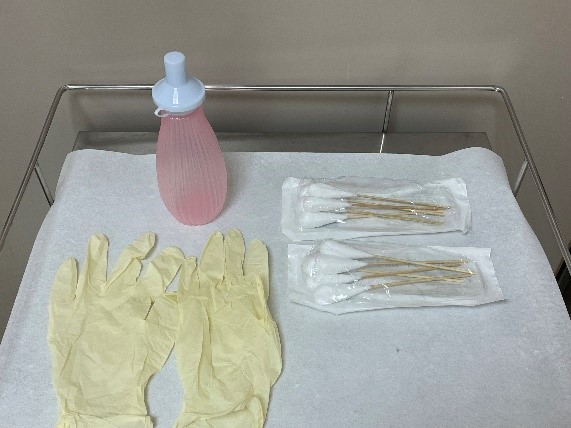
- Wash pot.
- 41-43 ℃ warm water.
- Clean diaper or under pad.
- Bedpan.
- Rinse cotton sticks (1 to several packs depending on the situation).
- Tissue paper or a dry towel.
Steps
- Wash hands.
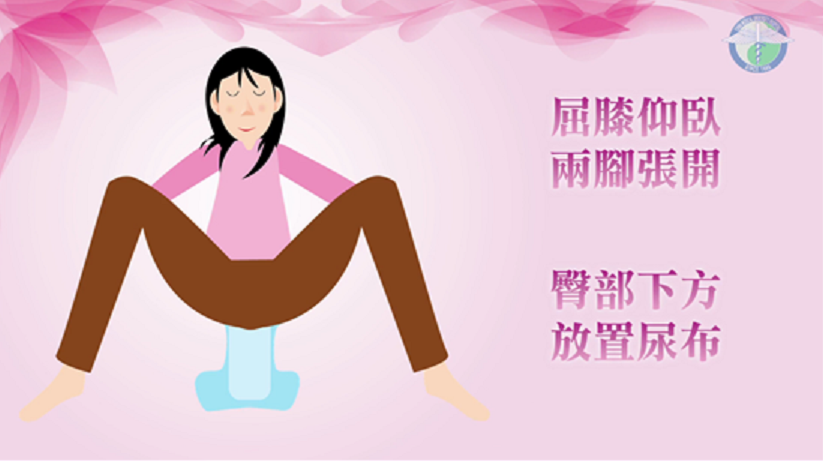
- To protect patients’ privacy, have them lie down facing up and knees bend up to their chest.
- Put some warm water in the wash pot.
- To prevent wet sheets, place a buttock cushion, diaper, or bedpan underneath the patient.
- Rinse the inner thighs with a rinsing bottle, ensuring the temperature is appropriate.
- Hold the wash pot in one hand and cotton bars in another hand; wash the private part slightly above the perineum with warm water. Separate the labia and clean urethra and vagina area.
- Steps for cleansing with cotton swabs (clean from top to bottom; do not wipe back and forth): From the urethral opening toward the anus → outer side of the labia minora → inner side of the labia minora → inner side of the far labia majora → inner side of the near labia majora.
- After cleansing, gently pat the perineal area dry with tissue paper or a clean towel.
 Facebook
 IG
IG
 YouTube